
Bone Grafting in Turkey
A bone graft rebuilds the jawbone when there isn't enough of it to hold a dental implant. At TUA Dental it costs from £130 per cc, is planned with a 3D CT scan in the clinic and is usually done in the same appointment as the implant — and you fly home two to three days later.

What is a dental bone graft?
A dental bone graft adds bone where the jaw has become too thin or too low to hold an implant. A bone substitute material — occasionally a little of your own bone — is placed where the bone is missing, usually covered with a protective membrane, and over the following months your own bone grows into it and takes its place.
At TUA Dental bone grafting costs from £130 per cc, and it is never a separate project: it is part of planning an implant. The procedure has different names depending on where it is done. A socket graft fills the socket straight after a tooth is removed, so the bone doesn't shrink while it heals. A ridge augmentation widens or raises a narrow ridge of jawbone. A sinus lift adds bone in the upper back jaw, beneath the sinus.
Most grafts today use a bone substitute — a natural bone mineral or a fully synthetic material — that acts as a scaffold for your own bone cells. Where your dentist needs it, a small amount of your own bone is taken from nearby in the mouth. Bone taken from the hip, which you may read about, belongs to hospital surgery for large reconstructions, not to routine implant dentistry. Your treatment plan names the material your dentist will use, just as it names the implant brand.
When do you need a bone graft for a dental implant?
You need a bone graft when your 3D CT scan shows less bone than the implant needs — most often where a tooth has been missing for a long time. Many implants need no graft at all, and when one is needed it is often small; your dentist sees this on the scan and writes it into your plan before you travel.
Bone needs a tooth to keep it in place. After an extraction the ridge that held the tooth shrinks, quickest in the first months and slowly for years afterwards, so a gap left for ten years usually has less bone than a gap left for one. A denture worn for a long time presses on the ridge and speeds this up, and gum disease (periodontitis) destroys bone around the teeth before they are lost. In the upper back jaw there is a further reason: after the back teeth go, the sinus above them expands downwards, which is what a sinus lift corrects.
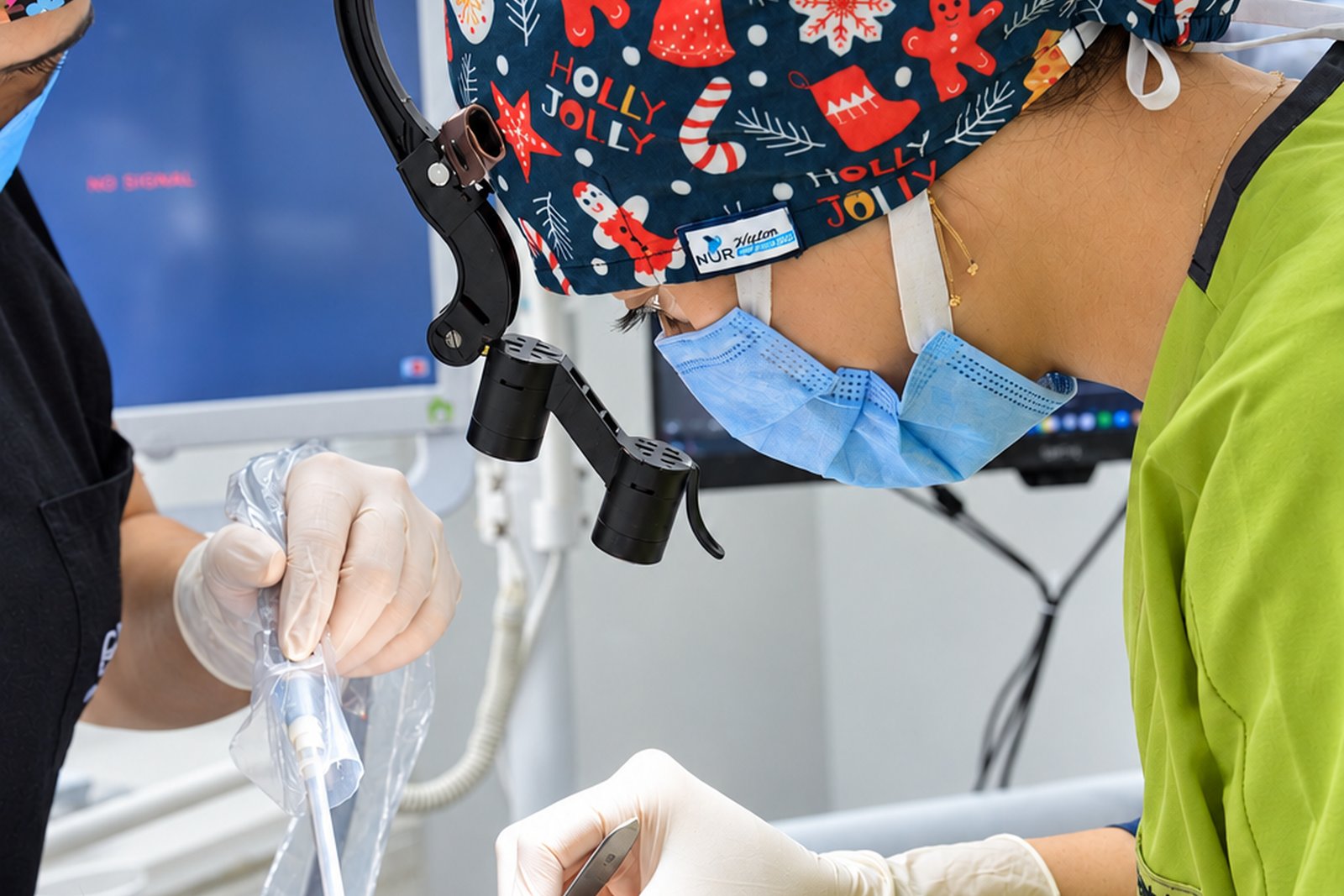
A 3D CT scan measures all of this to the millimetre: the height and width of the bone, its density and the position of the nerve and the sinus. That is why every implant at TUA Dental starts with a 3D scan in the clinic — the scan decides whether you need a graft, not a price list. Our team of five dentists includes a specialist in periodontology for cases where gum disease has played a part.
Send us a recent X-ray if you have one, with six photos of your teeth — our dentist tells you whether a graft is likely, and the 3D scan in the clinic confirms it.
How a bone graft is done, step by step
A bone graft takes about 30 to 60 minutes under local anaesthetic, and in most cases it is done in the same appointment as the implant. You feel pressure and movement during the procedure, but no pain.
- 3D CT scan and plan. On your first day the dentist takes the scan, measures the bone and confirms the plan you received before you travelled: where the implant goes, whether a graft is needed, and how much.
- Anaesthetic. Local anaesthetic numbs the area completely, so you feel pressure but no pain.
- Graft and implant. The gum is opened, the graft material is placed where the bone is missing and, where the bone allows, the implant goes in at the same time. A membrane covers the graft and the gum is stitched closed.
- Check before you fly. You leave with written aftercare notes and your medication; your dentist checks the site before you fly home two to three days later.
Doing the graft and the implant in one appointment means one procedure instead of two and no extra trip. When a defect is too large to place the implant straight away, your dentist sets the timing from your 3D scan, and your plan says so before you book — there are no surprises in the chair.
Healing and recovery after a bone graft
Most patients are back to their normal day within two to three days, while the graft itself takes several months to turn into solid bone. With a graft, the time before your final teeth is three to six months instead of two to three; your dentist confirms the exact time from your 3D scan.
If you take the medication you are given, use a cold compress and follow your dentist's advice, healing is usually comfortable. For the first week:
- eat soft, lukewarm food and chew on the other side;
- don't rinse hard, spit forcefully or drink through a straw for the first day or two;
- avoid smoking, alcohol and strenuous exercise;
- keep brushing your other teeth and rinse gently as your dentist explains.
What is normal: a little tenderness and a few small grains of graft material in your mouth in the first days. When to message us: pain that increases after the third day, a temperature, a bad taste or discharge, or a gap in the gum where the membrane shows. Your coordinator passes your photographs to the dentist, who tells you what to do.
During the healing months you live normally. The graft and the implant are under the gum, and your coordinator stays in touch until your second visit.
When can you fly after a bone graft?
Two to three days after the procedure, once your dentist has checked the site. A first visit with a bone graft therefore takes three days, the same as a straightforward implant visit.
| Your implant treatment with a bone graft | How long |
|---|---|
| Visit 1: 3D scan, graft and implant | 3 days; you fly home two to three days after the procedure, once your dentist has checked the site |
| Healing at home | 3 to 6 months (2–3 months without a graft) |
| Visit 2: digital impression, crown made in our own lab and fitted | 6 days (up to 8) |
Hotel and VIP transfer are included on both visits, and your coordinator plans the dates around direct flights to Izmir. Flights are not included; we help you plan them, free.
Bone graft cost: UK vs Turkey
In the UK a dental bone graft typically costs £400–£2,500 per site, depending on its size and the material, with minor socket grafts from about £150.¹ At TUA Dental bone grafting costs from £130 per cc, and it is added to your plan only if your 3D scan shows you need it.
| Treatment | Typical UK price¹ | TUA Dental |
|---|---|---|
| Bone graft | £400–£2,500 per site (minor grafts from £150) | from £130 per cc |
| Dental implant with zirconia crown | £2,000–£3,000 | £375 |
| Example: 2 implants with crowns and a bone graft | £4,400–£8,500 | £1,010 (with 2 cc of graft) |
| Consultation, 3D CT scan and treatment plan | £200–£650, often quoted separately | included |
No hidden costs: the price in your treatment plan is the price you pay. How much graft material you need depends on the size of the gap in the bone, which your dentist measures on the 3D scan, so your plan states the amount and the price before you book anything. Hotel and VIP transfer included. For patients from Ireland, bone grafting is from €150 per cc — every price in euro is on our Ireland page.
The UK comparison for the implant itself, including what the NHS covers, is on dental implants: UK vs Turkey, and every price we charge is on our full price list.
Work out your price
¹ Typical UK and Irish prices: published price lists, October 2026 — ranges and sources on our comparison pages for dental implants, full mouth implants and Ireland. Your exact price is confirmed in your free treatment plan.
Get your free treatment plan — with any graft priced in advance+90 551 850 04 90
Bone graft or sinus lift?
A sinus lift is a bone graft in one particular place: the upper back jaw, beneath the maxillary sinus, where the bone is often thinnest after the back teeth are lost. At TUA Dental a sinus lift costs from £210 per side; the principle is the same as any graft, while the technique and the rules for the days afterwards are a little different.
For a whole jaw of teeth on implants, a graft or sinus lift can often be avoided: in All-on-4 and All-on-6 the back implants are angled to use the bone that is there. Your dentist chooses the approach from your 3D scan and explains it in your plan. How a sinus lift is done, how long recovery takes and when you can fly are on our sinus lift page.
Why TUA Dental for your graft and implants
We place more than 1,800 implants a year, so bone grafting is routine here, not an exception. Our Principal Dentist, Tuğçe Arslan, has placed more than 2,200 implants; our five dentists include a specialist in periodontology; the 3D CT scanner is in the clinic.
Your implant comes from an established maker — Straumann, Nobel Biocare, Neodent and the other brands on our list — with its own implant passport and a lifetime guarantee, and your crown is made in our own CAD/CAM lab with a five-year guarantee. An English-speaking patient coordinator is with you from your first message to your last check-up. How the whole implant treatment works, from the first scan to the final crown, is on our dental implants page.
Dental implants in Turkey · Full 2026 price list · How to check a clinic before you book
¹ Typical published UK prices, October 2026: the price pages and cost guides of UK dental clinics and clinic groups, read on 28 October 2026. Prices vary by clinic, region and case; treat them as a guide and ask every clinic for an itemised quote.
Last updated:
Your new smile starts here
Your free treatment plan in 3 steps
Step 1Fill in the form
Step 2We plan your treatment
Step 3We plan your trip
 FreeYour personal treatment plan
Your English-speaking patient coordinator will get in touch and ask you for:
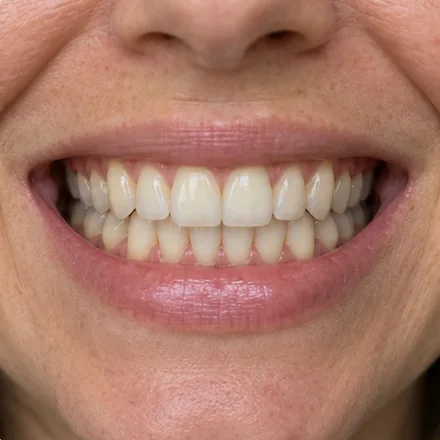
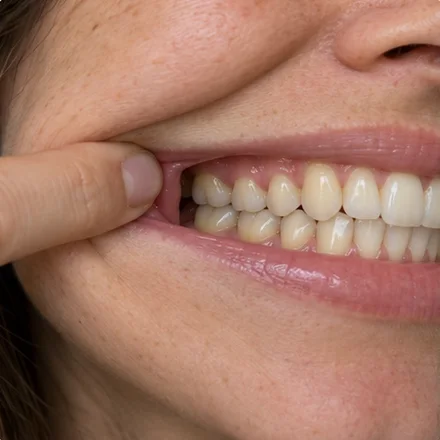
- Photos of your teeth
- Your X-ray, if you have one
- Your dentist's treatment plan or quote, if you have one
From these, our experienced dentist prepares your free treatment plan – with all treatments and prices. Hotel & transfer freeYour stay in Kuşadası
As soon as your treatment plan is ready, we take care of everything else:
- Your appointment is set to fit your treatment plan.
- We arrange your hotel and VIP airport transfer (free of charge).
- We help you plan your flight free of charge.
If you wish, we go through your plan with you beforehand in a video call, by appointment.
 1Face from the front,
 2Teeth together,
 3Right side
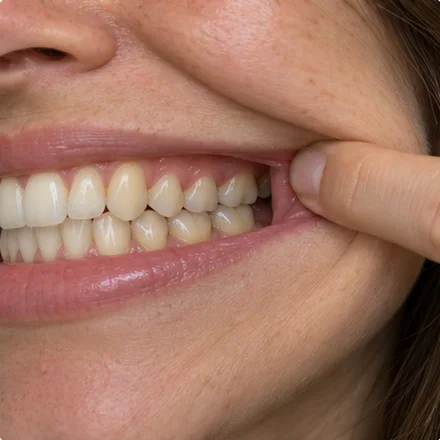 4Left side
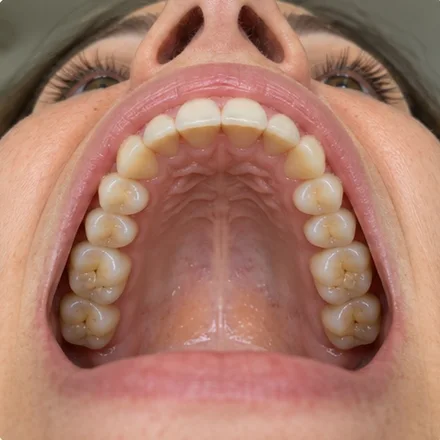 5Upper jaw
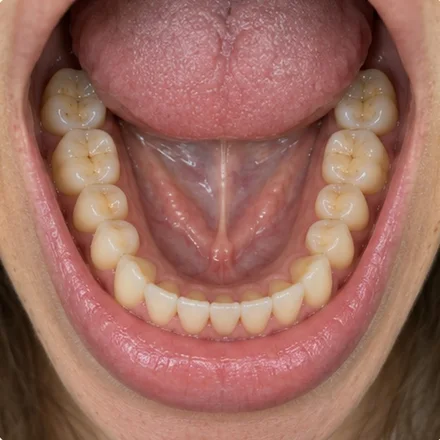 6Lower jaw
Bone grafting: frequently asked questions
How much is a dental bone graft in the UK?
A dental bone graft typically costs £400–£2,500 per site in the UK, depending on its size and the material, and minor socket grafts start at about £150. It is usually quoted on top of the implant, which costs £2,000–£3,000 with its crown, and the 3D scan is often charged separately as well. At TUA Dental bone grafting is from £130 per cc, the implant with zirconia crown is £375, and the consultation, 3D CT scan and treatment plan are included — hotel and VIP transfer too.
How much does bone grafting cost in Turkey?
At TUA Dental bone grafting costs from £130 per cc (€150 for patients paying in euro). It is added to your plan only if your 3D scan shows you need it, and your plan states the amount and the price before you book anything. As an example, two implants with zirconia crowns and 2 cc of graft come to £1,010. No hidden costs: the price in your treatment plan is the price you pay, and hotel and VIP transfer are included.
Is a dental bone graft painful?
Not during the procedure: it is done under local anaesthetic, so you feel pressure but no pain. Afterwards the medication you are given keeps you comfortable, and most patients are back to their normal day within two to three days. Soft food for a week, no smoking and no strenuous exercise help the graft heal undisturbed. If anything feels wrong, you message your coordinator and the dentist tells you what to do.
Do all dental implants need a bone graft?
No. Many implants need no graft at all, and when one is needed it is often small. Whether you need one depends on how much bone is left where the tooth is missing — which depends on how long ago the tooth was lost, whether you have worn a denture and whether gum disease has played a part. A 3D CT scan measures it to the millimetre. Our dentist can usually tell from a recent X-ray whether a graft is likely; the scan in the clinic confirms it, and your plan says so before you travel.
How long after a bone graft can I have an implant?
Usually there is no wait: in most cases the graft and the implant are done in the same appointment, so you need one procedure and one trip rather than two. When the gap in the bone is too large to place the implant straight away, your dentist sets the timing from your 3D scan and your plan says so before you book. Either way, with a graft the healing time before your final teeth is three to six months instead of two to three, and the crown is fitted on your second visit.
When can I fly after a bone graft?
Two to three days after the procedure, once your dentist has checked the site. A first visit with a bone graft therefore takes three days, the same as a straightforward implant visit. Your coordinator plans the dates around direct flights to Izmir from London Stansted, Gatwick, Manchester and Dublin, and the VIP transfer to the airport is included.
What are the signs of a failed bone graft?
A little tenderness and a few small grains of graft material in your mouth in the first days are normal. What is not: pain that increases after the third day, a temperature, a bad taste or discharge, or a gap in the gum where the membrane shows. If you notice any of these, message your coordinator with a photograph and the dentist tells you what to do — you are never left to judge it alone. Not smoking and following the aftercare advice are the two things that help a graft most.
What is a dental bone graft made of?
Usually a bone substitute: a natural bone mineral or a fully synthetic material, both of which act as a scaffold that your own bone grows into and replaces over several months. Where the dentist needs it, a small amount of your own bone from nearby in the mouth is added. The graft is often covered with a membrane that protects it while it heals. Your treatment plan names the material your dentist will use, as it names the implant brand.