Veneers in Turkey
An E.max veneer at TUA Dental costs £185 per tooth — eight veneers £1,480, ten £1,850 — designed digitally to your face, prepared as little as possible and fitted in one visit of six days. Hotel and VIP transfer included, and your free treatment plan lists every tooth and its price.

What are veneers?
A veneer is a thin shell of ceramic, usually 0.3 to 0.7 millimetres thick, bonded to the front of a tooth to change its colour, shape or length. At TUA Dental we make veneers from E.max, a lithium disilicate glass-ceramic, and price them at £185 per tooth.
Veneers are the treatment for teeth that are healthy but don't look the way you want them to: discoloured teeth that whitening can't lift, small chips, worn edges, gaps, teeth that look too short or sit slightly out of line. Because the shell covers only the visible face of the tooth, most of your own tooth stays exactly as it is. That is the difference between a veneer and a crown, which wraps the whole tooth.
"Porcelain veneers" and "ceramic veneers" mean the same thing. Porcelain is a type of ceramic, and modern veneers are pressed or milled from glass-ceramics such as E.max rather than built up from the layered porcelain of twenty years ago. Each veneer is made for one tooth in our own CAD/CAM lab, from a digital 3D scan of your mouth, so it fits to a fraction of a millimetre.
How do veneers work? The surface of the tooth is lightly prepared, the veneer is tried in, and it is then bonded to the enamel with a resin cement that sets under light. Once bonded, veneer and tooth behave as one piece: you eat, speak and brush as you always have.
Veneer, crown or composite?
Three treatments change the look of a tooth: a veneer covers its front surface, a crown covers all of it, and composite bonding builds the tooth up directly with a resin in one sitting. At TUA Dental an E.max veneer and an E.max crown both cost £185 per tooth, and a zirconia crown £145.
Which one suits a tooth depends on how much healthy tooth there is to work with:
- Veneer — for a tooth that is sound but discoloured, chipped, worn, slightly rotated or too short. The most conservative choice: only the front is prepared.
- Crown — for a tooth that is already heavily filled, cracked, root-treated or broken down. A crown holds a weakened tooth together; a veneer cannot.
- Composite bonding — resin shaped by hand in a single appointment. The quickest and cheapest option, and useful for very small repairs, but composite stains, dulls and chips sooner than ceramic and usually needs re-polishing or replacing within a few years.
Our dentists recommend ceramic veneers for a smile you want to keep looking the same for many years: E.max holds its colour, resists staining from tea, coffee and red wine, and has a translucency that resin can't match. If you have been quoted composite veneers elsewhere, send us the same photographs — we will tell you, tooth by tooth, which option we would choose and why.
Implants and veneers are not alternatives to each other: veneers improve teeth you have, implants replace teeth you have lost — see dental implants in Turkey. If you are reading about "Turkey teeth", they are usually a full set of crowns or veneers; our guide explains what Turkey teeth are. How veneers and crowns compare in detail — how much tooth each removes and which shades suit which complexion — is a chapter of its own in this guide: veneers or crowns, with the colour chart.
How much tooth is removed?
For an E.max veneer we remove between 0.3 and 0.7 millimetres from the front of the tooth — roughly the thickness of a fingernail — and nothing from the back or the biting edge unless the design calls for it. A crown, by comparison, removes 1 to 2 millimetres all the way round.
This is the question UK patients ask most, and it deserves a plain answer: a veneer prepared properly does not leave a "shaved-down peg". The tooth under a veneer looks almost exactly like the tooth before, with a thin layer of enamel reduced on the front so the veneer sits flush with its neighbours instead of standing proud. Pegs are what crowns leave on healthy front teeth — a different treatment, and one our dentists use only when a tooth needs it.
Three things keep preparation to a minimum at TUA Dental. First, the design comes before the drill: every veneer is designed digitally and approved by you before any preparation, so the dentist knows exactly where a tenth of a millimetre is needed and where it isn't. Second, the preparation follows that design — the dentist reduces only where the veneer needs room. Third, E.max can be made thin and still be strong, which is one of the reasons we chose it.
If a tooth will need more than minimal preparation, because it is badly out of line, for example, your free treatment plan says so before you travel, and says why.
Digital smile design and mock-up
Our dentists, led by Principal Dentist Tuğçe Arslan, plan more than 220 smile designs a year, and every set of veneers at TUA Dental begins with one. You approve the design on screen before a single tooth is prepared, and on day two of your six-day visit it is tried in your mouth as a mock-up.
Digital smile design means we photograph and scan your face and teeth, then design the new teeth to your proportions: the width of your smile, the line of your lips, the midline of your face, the tone of your skin and the whites of your eyes. AI-assisted software proposes shapes and sizes; the dentist adjusts them; you see the result on screen before anything is made.
Then comes the mock-up, on day two: your designed teeth are tried in, so you see the new shape and length in your own mouth — in a mirror, in photographs, when you talk. Whatever you want changed is changed: a little shorter, a little rounder, a shade warmer. Your veneers are then made in our own CAD/CAM lab, tried in again on days three and four, and bonded only when you approve them.
This is also where the fear of a "fake" smile is answered. Veneers look fake when they are too white, too long and all the same shape. A smile designed to your face and tried in first can be as natural or as bright as you choose — and you choose with the mock-up in your mouth, not from a shade card.
Send six photos of your teeth — we send back what we would plan and what it would cost, tooth by tooth.
Your six-day visit, day by day
Veneers at TUA Dental take one visit of six days, and larger sets are planned over up to eight. You arrive on day one and leave on day six with your finished smile — hotel and VIP transfer included.
One visit of six days (up to eight). Hotel and VIP transfer included.
| Day | What happens |
|---|---|
| Day 1 | Examination, photographs and a digital 3D scan — no impression trays. Smile design with your dentist; once you approve it, minimal preparation and temporary veneers. |
| Day 2 | Mock-up of your smile design in your mouth; shape, length and shade are adjusted until you are happy. |
| Day 3 | Your E.max veneers are pressed or milled in our own CAD/CAM lab; a short try-in of about an hour. |
| Day 4 | Try-in of the finished veneers: fit, shade and shape checked in your mouth, adjusted in the lab the same day if anything needs it. |
| Day 5 | Bonding once you approve, bite check and polish. |
| Day 6 | Final check-up and photographs; your aftercare notes and treatment record. VIP transfer to Izmir airport. |
Between appointments you are free. Kuşadası is a world-famous holiday destination on the Aegean, Ephesus is half an hour away, and the clinic is open seven days a week, so your appointments fit around the days you want to spend at the beach. Your English-speaking patient coordinator is with you from your first message to your last check-up; the VIP transfer meets you at Izmir Adnan Menderes Airport, about 45 minutes from the clinic. Direct flights from London Stansted, Gatwick, Manchester and Dublin — see our Kuşadası page. Flights are not included in the price; we help you plan them, free.
Prices: veneers in Turkey
An E.max veneer at TUA Dental costs £185 per tooth, so eight veneers are £1,480 and ten are £1,850. Hotel and VIP transfer are included, and the price in your treatment plan is the price you pay. In the UK a single porcelain veneer typically costs £750–£950; veneers cost UK vs Turkey compares them tooth by tooth and set by set.
| Veneers | Price (E.max, £185 per tooth) |
|---|---|
| 1 veneer | £185 |
| 6 veneers (the upper front six) | £1,110 |
| 8 veneers | £1,480 |
| 10 veneers | £1,850 |
| 16 veneers (upper and lower front) | £2,960 |
| 20 veneers | £3,700 |
What's included: consultation and examination, digital 3D scan, digital smile design and mock-up, hotel, and VIP transfer between Izmir airport, your hotel and the clinic. Flights are not included; we help you plan them, free. No hidden costs: the price in your treatment plan is the price you pay.
Why is the price so much lower than you're used to? Laboratory and running costs in Turkey are a fraction of those in the UK, and we make the veneers in our own CAD/CAM lab instead of paying an outside laboratory. The material is the same E.max used by dentists in Britain and Ireland, and our clinic plans more than 220 smile designs a year.
20 veneers or the 20-crown Hollywood Smile? Patients often compare a full set of 20 veneers (£3,700) with our Hollywood Smile package of 20 zirconia crowns (£2,900). They are different treatments, not a cheaper and a dearer version of the same thing. Veneers are E.max shells on the front of teeth that are sound; crowns cover the whole tooth and are the right choice when teeth are heavily filled, worn or broken down, and we make them from monolithic zirconia at £145 each. A smile makeover can also mix the two — veneers where the tooth is sound, crowns where it isn't — and your free treatment plan says which each tooth needs. The package is explained on our Hollywood Smile page.
Patients from Ireland: an E.max veneer is €220, so eight veneers are €1,760 and ten €2,200. Veneers count as non-routine dental treatment, so you can claim 20% back from Revenue with a Form Med 2 — see our Ireland page.
Work out your price
¹ Typical UK and Irish prices: published price lists, October 2026 — ranges and sources on our comparison pages for dental implants, full mouth implants and Ireland. Your exact price is confirmed in your free treatment plan.
Get your free treatment plan — every tooth and its price+90 551 850 04 90
Why E.max?
E.max is a lithium disilicate glass-ceramic made by Ivoclar, and it has been the leading veneer material for almost twenty years. At TUA Dental every veneer is E.max, pressed or milled in our own CAD/CAM lab and priced at £185 per tooth.
Three qualities make it the right material for the front of a smile. Translucency: natural enamel lets light pass partly through it, and E.max does the same, so a veneer picks up the warmth of the tooth beneath instead of sitting on it like paint — the opaque, chalky look of bad veneers comes from materials that block light. Strength: E.max is strong enough to be made thin, which is exactly what minimal preparation needs; a thin veneer that chipped would be no use to anyone. Colour stability: the glazed glass-ceramic surface does not stain or dull the way composite does, so the shade you approve at the mock-up is the shade you keep.
E.max or zirconia? Zirconia is harder and more opaque; it is our material for crowns, above all on back teeth and for full-arch work, where strength matters more than translucency. For veneers on front teeth we choose E.max for the way it handles light. Because your veneers are made in our own CAD/CAM lab, a shade or shape adjustment at the try-in is done the same day rather than posted to an outside laboratory and back.
How E.max compares with porcelain and composite veneers, and what it costs in the UK, is explained in our guide to E.max veneers.
Are veneers permanent? How long do they last?
Veneers are a permanent treatment: once a tooth has been prepared for a veneer it will always need a veneer or a crown, which is one reason we remove only 0.3 to 0.7 millimetres in the first place. With good care an E.max veneer lasts many years, and when it is eventually replaced the new one is made on the same lightly prepared surface — no further tooth is lost.
What "permanent" means in practice: a veneer does not wear out the tooth beneath it, and the enamel under it is sealed by the bond. The two things that shorten a veneer's life are grinding and biting hard things with the front teeth — ice, pen tops, nails — both easy to avoid, and a night guard takes care of the first. How long veneers, crowns and implants last, treatment by treatment, has its own chapter in this guide: how long Turkey teeth last; the figures for each type of veneer are in how long do veneers last?
Aftercare
Aftercare is included, and on the day of fitting you leave with two things: written aftercare notes and your treatment record, so your own dentist in the UK or Ireland has everything needed for routine check-ups. Your coordinator stays in touch after you fly home, and your dentist reviews your photographs whenever you want a check — keep your six-monthly check-ups as you would with your own teeth.
Looking after veneers is the same as looking after teeth: brush twice a day with a non-abrasive toothpaste, floss, and wear a night guard if you grind your teeth (ask us about one). Avoid biting into very hard things with your front teeth. Veneers don't stain, but the edges of the teeth and the gum line are still yours, so hygiene matters as much as ever. If anything feels wrong — a rough edge, sensitivity that doesn't settle — you message your coordinator, send a photograph, and the dentist tells you what to do. If a visit is needed, we plan it with you.
Real results
More than 220 smile designs a year at TUA Dental, and every case photographed in the clinic before and after. Three of them are below: natural shades, teeth that fit the face, and no two sets the same.
 BeforeAfter
 BeforeAfter
 BeforeAfter
See all before-and-after cases · Veneers before and after · Full 2026 price list · How to check a clinic before you book
Last updated:
Your new smile starts here
Your free treatment plan in 3 steps
Step 1Fill in the form
Step 2We plan your treatment
Step 3We plan your trip
 FreeYour personal treatment plan
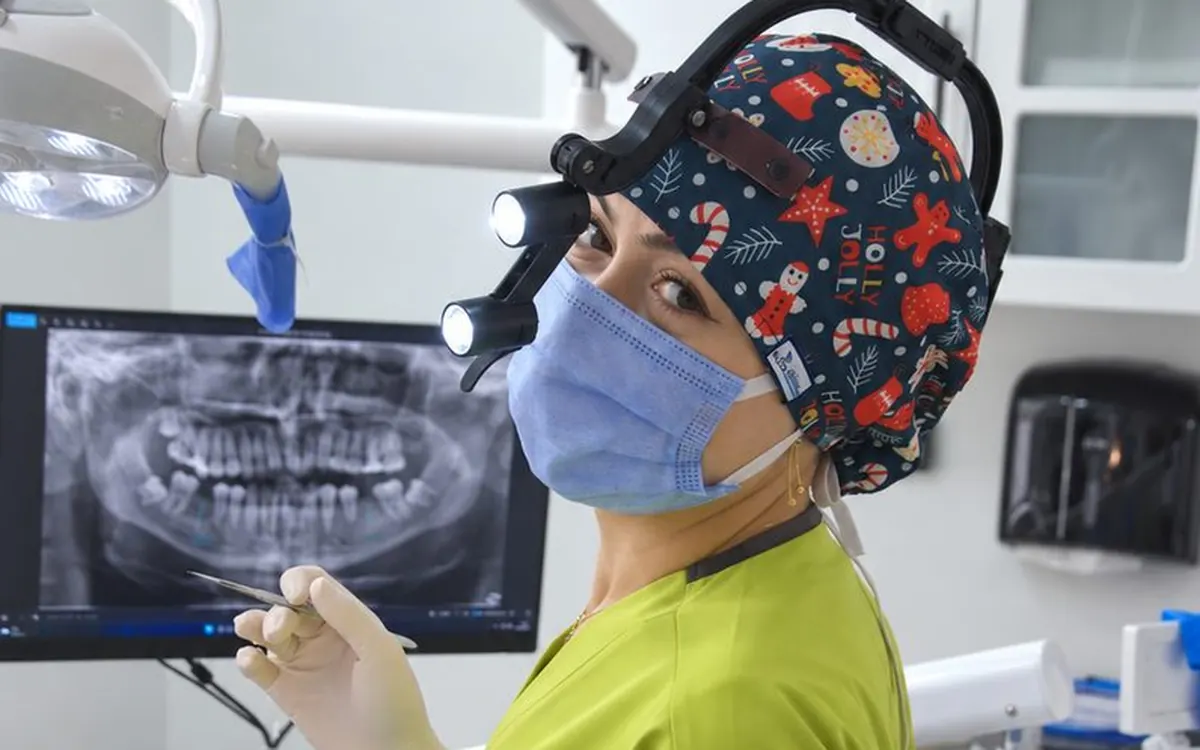
Your English-speaking patient coordinator will get in touch and ask you for:
- Photos of your teeth
- Your X-ray, if you have one
- Your dentist's treatment plan or quote, if you have one
From these, our experienced dentist prepares your free treatment plan – with all treatments and prices. Hotel & transfer freeYour stay in Kuşadası
As soon as your treatment plan is ready, we take care of everything else:
- Your appointment is set to fit your treatment plan.
- We arrange your hotel and VIP airport transfer (free of charge).
- We help you plan your flight free of charge.
If you wish, we go through your plan with you beforehand in a video call, by appointment.
 1Face from the front,
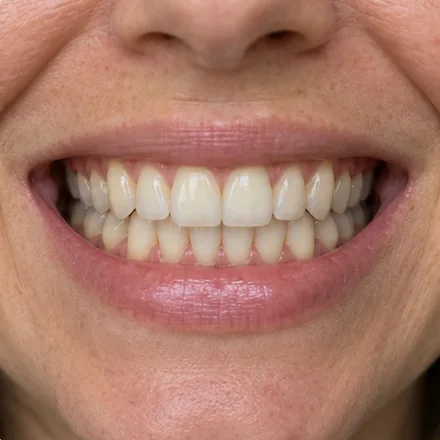 2Teeth together,
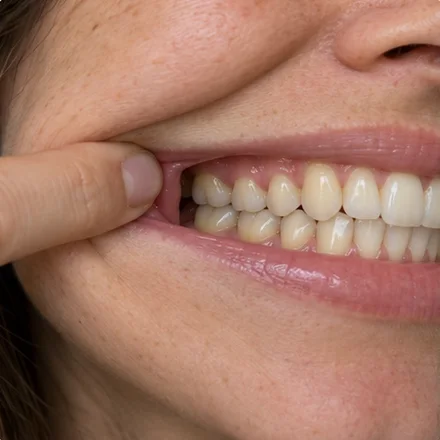 3Right side
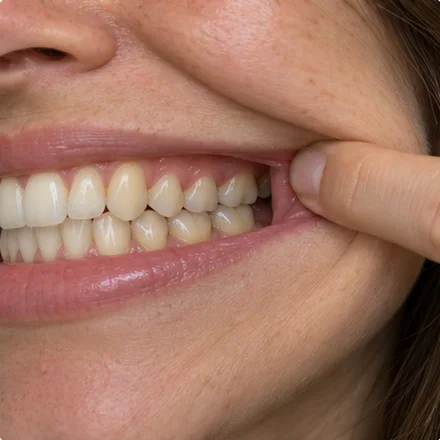 4Left side
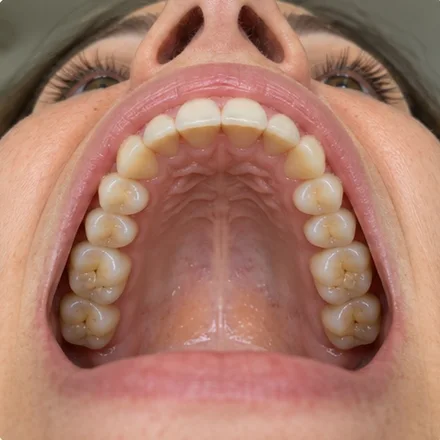 5Upper jaw
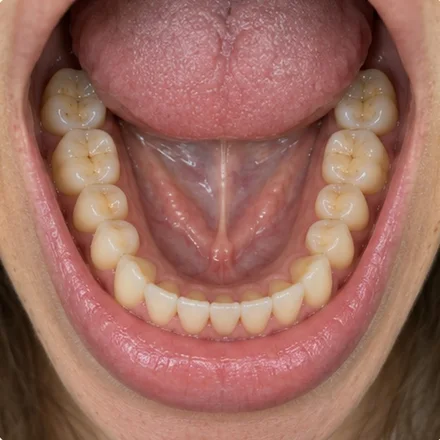 6Lower jaw
Veneers in Turkey: frequently asked questions
How much are veneers in Turkey?
At TUA Dental an E.max veneer costs £185 per tooth: eight veneers £1,480, ten £1,850, twenty £3,700. Consultation, digital 3D scan, smile design, mock-up, hotel and VIP transfer are included; flights are not, and we help you plan them free. Prices across Turkey vary a great deal with the material and the clinic, so the figures to compare are the price per tooth for E.max and what the price includes. Your free treatment plan lists every tooth and its price before you book anything, and the price in the plan is the price you pay. For patients from Ireland the same veneer is €220, and 20% of it can be claimed back from Revenue with a Form Med 2.
How much are 8, 10 or 20 veneers in Turkey?
Eight E.max veneers cost £1,480, ten £1,850 and twenty £3,700 at TUA Dental — the per-tooth price of £185 multiplied by the number of teeth, with hotel and VIP transfer included. Most patients choose eight or ten upper veneers, which cover the teeth that show when you smile, and some add six or eight lower ones. A set of 20 veneers is not the same as our Hollywood Smile package of 20 zirconia crowns at £2,900: veneers are E.max shells for teeth that are sound, crowns cover the whole tooth and suit teeth that are heavily filled or worn. Your dentist tells you tooth by tooth which you need, and many smile makeovers mix the two.
How long do veneers take in Turkey?
One visit of six days at TUA Dental, planned over up to eight for larger sets. Day one is the examination, photographs, digital scan and smile design and, once you approve the design, minimal preparation and temporary veneers; day two the mock-up in your mouth; days three and four try-ins and any adjustments while your E.max veneers are made in our own CAD/CAM lab; day five the bonding and polish; day six a final check and photographs before you fly home. Between appointments you are free to enjoy Kuşadası, and your VIP transfer takes you back to Izmir airport on the last day. Hotel and VIP transfer are included.
Do you shave the teeth for veneers?
Only a little. For an E.max veneer we remove 0.3 to 0.7 millimetres from the front of the tooth — about the thickness of a fingernail — and nothing from the back or the biting edge unless the design calls for it. A crown removes 1 to 2 millimetres all the way round, which is why the "shaved-down pegs" you may have seen come from crowns on healthy teeth, not from veneers done properly. Every veneer at TUA Dental is designed digitally and approved by you before any preparation, so the dentist reduces only where the veneer needs room.
Are veneers permanent?
Yes. Once a tooth has been prepared for a veneer it will always need a veneer or a crown, so veneers are a decision for life — one reason we remove as little tooth as possible. The veneers themselves are not forever: with good care an E.max veneer lasts many years, and when one is eventually replaced the new veneer is made on the same lightly prepared surface, so no further tooth is lost. The two things that shorten a veneer's life are grinding and biting hard objects with the front teeth; a night guard takes care of the first and a little care the second.
E.max or zirconia veneers?
At TUA Dental veneers are made of E.max, a lithium disilicate glass-ceramic that lets light through the way natural enamel does, so the veneer takes on the warmth of the tooth beneath it instead of looking painted on. Zirconia is harder and more opaque; it is our material for crowns — £145 each — above all on back teeth and for full-arch work, where strength matters more than translucency. Some clinics offer zirconia veneers; for front teeth we recommend E.max for its appearance, and it is strong enough to be made thin, which is what minimal preparation needs. Both materials are made in our own CAD/CAM lab from your digital scan.
Is Turkey good for veneers?
The material and the method are the same as in a good UK practice — E.max veneers, a digital design approved before preparation, a mock-up before bonding — and the price per tooth at TUA Dental is £185. What makes the difference is the clinic, not the country: a named dentist (Tuğçe Arslan, Principal Dentist), more than 220 smile designs a year, a Ministry of Health licence for international patients, five dentists, our own CAD/CAM lab, an itemised free treatment plan and aftercare after you fly home. The questions UK dentists suggest you ask before going abroad — who will treat you, what the price includes, what happens afterwards — are the ones we answer in writing before you book. How to check a clinic before you book sets them out.
What do teeth look like under veneers?
Almost like your teeth before. A veneer is bonded to the front of the tooth after 0.3 to 0.7 millimetres of enamel has been reduced, so the tooth keeps its shape, its back surface and its biting edge; it simply looks slightly matt and a fraction slimmer at the front. The alarming photographs of teeth filed to small pegs show teeth prepared for crowns, which remove 1 to 2 millimetres all round — a different treatment. At TUA Dental the design comes first, so you know before any preparation exactly what will be done to each tooth, and your treatment plan says whether each tooth is getting a veneer or a crown.