Turkey Teeth Gone Wrong: Why It Happens and How to Avoid It
Turkey teeth go wrong for three avoidable reasons: healthy teeth shaved down for crowns they never needed, treatment rushed into a few days without planning, and no one to call when something feels wrong back home. This guide explains each one, how to check a clinic before you book, and what happens if you need help after treatment.
- Named dentists
- 3D planning and mock-up
- Itemised free treatment plan
- Lifetime implant guarantee
- Aftercare after you fly home
Send your photos — we tell you what we would do and what we would not.
Why do Turkey teeth go wrong?
Three causes account for most of the Turkey teeth stories you have read: healthy teeth cut down for crowns, treatment compressed into a few days without a plan, and nobody to call afterwards. None of the three is about Turkey or about the treatments themselves — the same mistakes produce the same results in any country — and all three are visible before you book, if you know where to look.
"Turkey teeth" is the UK name for cosmetic dental work done in Turkey, usually a full set of crowns or veneers, sometimes implants; our Turkey teeth guide explains the term and the treatments behind it. The phrase became a warning because of a particular kind of clinic and a particular kind of trip: a fixed package sold before anyone has seen an X-ray, a week in which everything is cut and fitted, and a WhatsApp number that goes quiet afterwards. The treatments — crowns, veneers, implants — are the same ones British dentists provide every day. The difference is in the planning, the materials, the time allowed for healing and the aftercare, and each of those can be checked in advance. The next two sections take the seven mistakes behind bad results one by one, and show what a well-run clinic does instead.
The seven mistakes behind bad Turkey teeth
Seven mistakes explain almost every bad result, and five of the seven happen before the patient sits in the chair. Each has a visible warning sign, and each has a clinical answer that good clinics have used for years.
1. Healthy teeth shaved down for crowns they never needed
A crown needs 1–2 mm of tooth removed all the way round; a veneer needs 0.3–0.7 mm from the front surface only, and sometimes none at all. When a healthy tooth that only needed a shade or shape change is cut for a crown, that tooth is committed to crowns for life — and when 20 or 28 healthy teeth are cut this way in one week, the result is the story you have read about: sensitivity, root canals later, and teeth that can never go back. The warning sign is a quote for "a full set of crowns" before anyone has looked at your teeth.
2. One shade, one shape for everyone
The "Turkey teeth look" — very white, oversized, identical from patient to patient — comes from choosing one shade and one tooth shape for everyone instead of designing for a face. Natural teeth vary in shade, length and translucency, and a smile is designed to the lips, the gum line and the skin tone of the person wearing it. The warning sign is a clinic whose before-and-after photos all end in the same smile.
3. Cutting without a design you have approved
When teeth are prepared without a digital design you have approved, and fitted without a trial of the result in your mouth, there is no moment to say "shorter", "less white" or "rounder" before the work is permanent. A design approved before preparation, and a mock-up and try-ins before fitting, cost a few days of the trip and prevent most of the regret. The warning sign is a timetable with no try-in before the final fitting.
4. Rushing: final teeth on implants that have not healed
An implant fuses with the bone over two to three months, three to six months after a bone graft, and the final crowns belong on implants that have finished healing. A trip that promises "implants and your final teeth in one week" skips that healing, and loaded too early is how implants are lost. The warning sign is one visit for an implant case; the standard is two visits, with provisional teeth in between if you wish.
5. Materials without a name
An implant without a brand, a "ceramic" crown that turns out to be acrylic, a veneer material nobody can name: when something needs attention years later, your dentist at home cannot find a matching part or a specification. Branded implants come with an implant passport; E.max and zirconia have manufacturers and data sheets. The warning sign is a price list that names treatments but no materials.
6. No itemised plan, and extras in the chair
A package price quoted for "new teeth" before an examination cannot be a plan, because nobody knows yet how many teeth need what. The extras then arrive in the chair — a root canal here, a bone graft there — when you are in no position to say no. The warning sign is a quote with one number and no items.
7. No one to call afterwards
A crown chips, a gum feels tender, a question comes up at 9 pm on a Sunday — and the number that answered within minutes before you paid now answers in days, or not at all. Your dentist at home has no records to work from, and the repair becomes a new treatment. The warning sign is a clinic that cannot name the person you will deal with after you fly home.
How a well-run clinic prevents each one
Each of the seven mistakes has a prevention that costs a clinic time rather than money, and all seven are standard practice at TUA Dental. The table puts them side by side, with what we do in the third column — so you can hold any clinic, including ours, to the same list.
| The mistake | The prevention | At TUA Dental |
|---|---|---|
| Healthy teeth cut for crowns | Veneer or crown decided tooth by tooth; minimal preparation; healthy teeth kept | Your free treatment plan names the treatment for each tooth; a tooth that only needs a shade change gets a veneer or whitening, not a crown |
| One shade, one shape for everyone | Shade and shape chosen with you, to your face and skin tone; natural options first | Digital smile design, a shade guide in daylight and your choice recorded in your plan before anything is cut |
| Cutting without an approved design | A digital design approved before preparation; a trial in the mouth before fitting | Design approved on screen before any tooth is prepared, mock-up on day two; nothing is cemented until you have seen and approved the result |
| Final teeth on unhealed implants | Two visits: implants first, two to three months of healing, then crowns | Three-day implant visit, healing at home, six-day crown visit; provisional teeth on the first visit if you wish |
| Materials without a name | Named brands, named ceramics, a passport for every implant | Straumann, Nobel Biocare, Dentsply Sirona, Neodent and seven other implant brands; E.max and monolithic zirconia from our own CAD/CAM lab; implant passport for every implant |
| No itemised plan | Every item priced before you book; the plan price is the final price | Free treatment plan with every treatment and its price; no hidden costs: the price in your treatment plan is the price you pay |
| No one to call afterwards | A named coordinator and your dentist, after you fly home; written guarantee | Your coordinator stays your contact; you send a photo, your dentist answers; lifetime guarantee on implants, five years on crowns |
Ask for your free, itemised treatment plan+90 551 850 04 90
Is it safe to get your teeth done in Turkey?
The UK government's travel advice for Turkey tells patients to "do your own research" and points them to the Turkish Ministry of Health's list of approved providers on the HealthTürkiye website; TUA Dental's clinic holds that Ministry's international health-tourism licence, is a member of the Turkish Dental Association and is ISO 9001 certified. Five dentists treat more than 3,000 patients a year from 32 countries here, more than 1,800 implants are placed every year, and every implant leaves with its passport.
Safety in dentistry is a clinic question, not a country question, and it comes down to the people, the equipment and the time. The people: named dentists, one of them a specialist in periodontology, led by Principal Dentist Tuğçe Arslan with more than 2,200 implants placed. The equipment: a 3D CT scanner for every implant plan, digital impressions, and our own CAD/CAM laboratory so that what is designed is what is fitted. The time: six days for crowns and veneers with a mock-up and try-ins before fitting, two visits for implants with healing at home. We answer the GDC's questions for you in writing, in your free treatment plan, before you book a flight — and the next section answers the one question the GDC leaves to your own dentist.
Will a UK dentist treat Turkey teeth? Will the NHS fix them?
Yes, a dentist in the UK can examine and look after teeth treated abroad, and the General Dental Council's own advice is to tell your dentist your plans so they are "aware of your plans in case of any later complications." What makes their job straightforward is four documents — your implant passport, your 3D scan, a treatment report and your written guarantee — and every TUA Dental patient flies home with all four.
The NHS treats clinical need: pain, infection, a broken tooth or a lost filling are seen under the normal NHS bands whatever country the original work was done in. What the NHS does not do is cosmetic work — nhs.uk notes that veneers are "generally only available privately, unless you can show a clinical need" and that implants are "usually only available privately" — so a crown you dislike or a veneer that chips is private treatment in the UK, at UK prices. That is why the aftercare that matters is the clinic's own, and why ours continues after you fly: your coordinator stays your contact, you send a photo first and your dentist tells you what to do, your records go to any dentist you choose at home, and your guarantee — lifetime on implants, five years on crowns — is in writing. Tell your UK dentist before you travel, as the GDC suggests; we give you the plan to show them.
Send your photos and your UK dentist's quote, if you have one — we tell you what we would do.
How to check a clinic before you book: 10 points
Ten checks separate a well-run clinic from a package seller, and you can run all ten from your sofa before paying a deposit anywhere. The third column shows how TUA Dental answers each one, so the list is also a test of us.
| Check | Why it matters | At TUA Dental |
|---|---|---|
| 1. A named dentist, with their qualifications and registration | The GDC's first question; a clinic that will not name your dentist cannot be held to anything | Your dentist is named on your treatment plan; the clinic holds the Ministry of Health's international health-tourism licence and is a member of the Turkish Dental Association |
| 2. A written plan with every item priced, before you book | A single package number is not a plan | Free treatment plan, every treatment with its price; no hidden costs: the price in your treatment plan is the price you pay |
| 3. A design you approve before any tooth is prepared | The only moment to change your mind cheaply | Digital smile design approved before preparation; mock-up and try-ins before fitting |
| 4. Material and brand names in writing | Unnamed materials cannot be matched or repaired later | E.max, monolithic zirconia, 11 named implant brands |
| 5. An implant passport for every implant | Brand, model, size and position for any dentist, anywhere | Issued with every implant; a copy in your file |
| 6. A 3D CT scanner in the clinic | Implants planned on a 2D X-ray are planned blind | 3D CT scan before every implant plan |
| 7. A realistic timetable | Crowns and veneers need six days; implants need two visits | 6 days (up to 8) for crowns and veneers; 3 + 6 days for implants, two to three months apart |
| 8. A written guarantee | A guarantee you cannot read is not a guarantee | Lifetime on implants, five years on crowns, in writing |
| 9. A named aftercare contact | The GDC asks "what aftercare do you provide?" — the answer should be a person | Your coordinator and your dentist, after you fly home |
| 10. Real reviews on independent platforms | Recent, detailed reviews with treatment names, not stock praise | Our Google reviews are public; read the recent ones and ask us about any of them |
Red flags
Six signs mean walk away, and all six are easy to spot in a first message or a first page. Each is the mirror image of one of the ten checks above.
- "Implants and your final teeth in 3 days." Implants need healing time; permanent teeth on fresh implants is the failure story in one sentence.
- One price for everyone, before anyone has seen an X-ray. A plan needs your teeth; a package only needs your card.
- No dentist's name anywhere. On the website, in the quote or in the clinic.
- Pressure to pay a deposit today to "hold the price" or "hold the date".
- No written, itemised plan — just a total and a promise.
- Only stock photos and the same smile in every before-and-after. Real patients have different faces, and real results show them.
What happens if something goes wrong after you get home?
Most problems after dental treatment are small and are solved with a photo and a conversation: a sore spot, a rough edge, a question about brushing. The route at TUA Dental has four steps, and the first three happen without you leaving home.
- You write to your coordinator — the same person you have dealt with from your first message.
- You send a photo, and your dentist looks at it and tells you what it is and what to do.
- If it needs a dentist's hands, your dentist works with a dentist near you where that is the quickest answer, with your records and implant passport as the common language.
- If it falls under your guarantee — lifetime on implants, five years on crowns — we put it right, including a return visit when that is what it takes.
Your records are yours: the implant passport, 3D scan, treatment report and guarantee go home with you, so no dentist ever has to guess what was done. Our guarantee is written, our coordinator is named, and the dentist who treated you is the dentist who answers.
What good Turkey teeth look like
Good work is invisible: natural shades, teeth in proportion to the face, gum lines left where they were. Three of our cases show what that means — a smile that nobody on the street can tell was made in a clinic.
 BeforeAfter
 BeforeAfter
 BeforeAfter
Every photo in our gallery was taken in our clinic and shows a different face each time — which is, in the end, the simplest check of all.
Sources: gov.uk, Turkey travel advice — health (updated 19 October 2026); General Dental Council, "Going abroad for your dental care"; nhs.uk, dental treatments (reviewed 8 July 2026). Read on 28 October 2026.
Last updated:
Your new smile starts here
Your free treatment plan in 3 steps
Step 1Fill in the form
Step 2We plan your treatment
Step 3We plan your trip
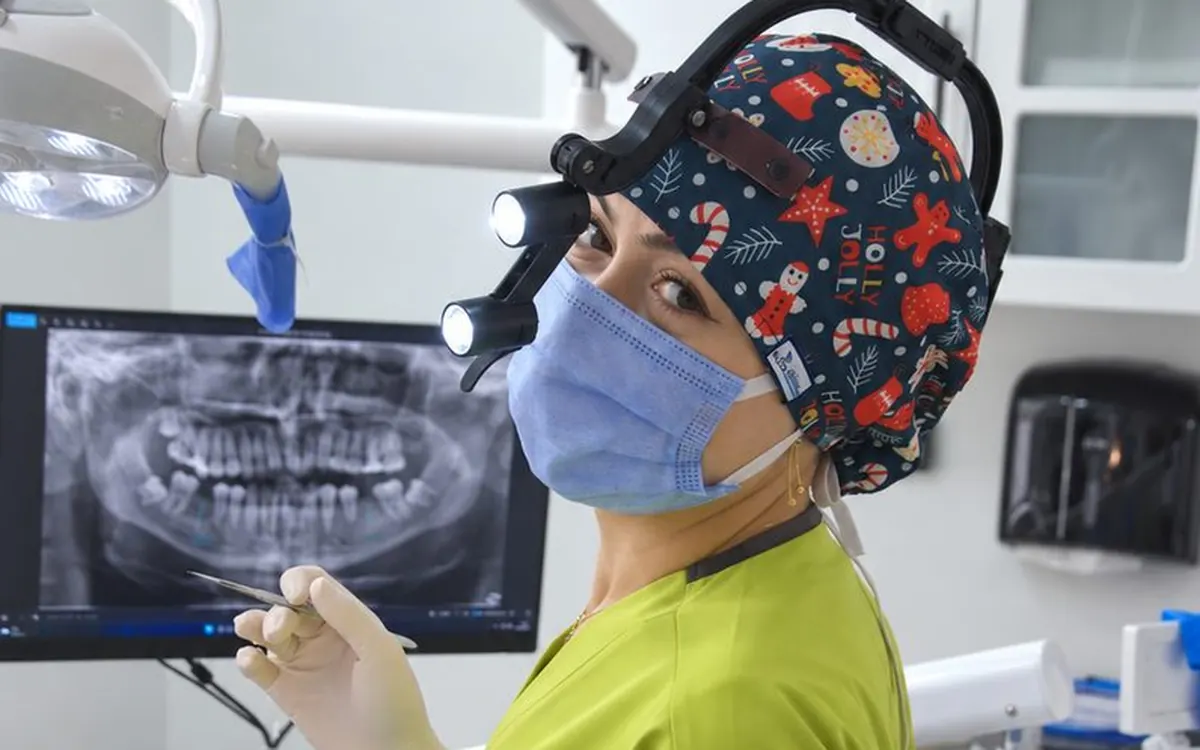 FreeYour personal treatment plan
Your English-speaking patient coordinator will get in touch and ask you for:
- Photos of your teeth
- Your X-ray, if you have one
- Your dentist's treatment plan or quote, if you have one
From these, our experienced dentist prepares your free treatment plan – with all treatments and prices. Hotel & transfer freeYour stay in Kuşadası
As soon as your treatment plan is ready, we take care of everything else:
- Your appointment is set to fit your treatment plan.
- We arrange your hotel and VIP airport transfer (free of charge).
- We help you plan your flight free of charge.
If you wish, we go through your plan with you beforehand in a video call, by appointment.
 1Face from the front,
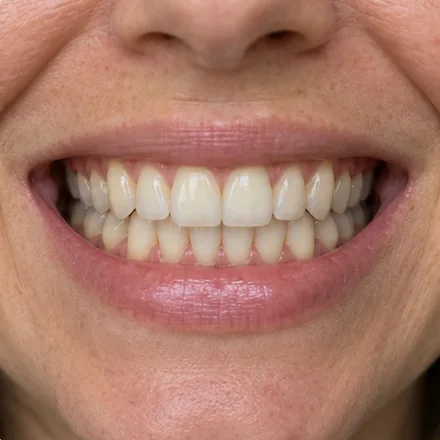 2Teeth together,
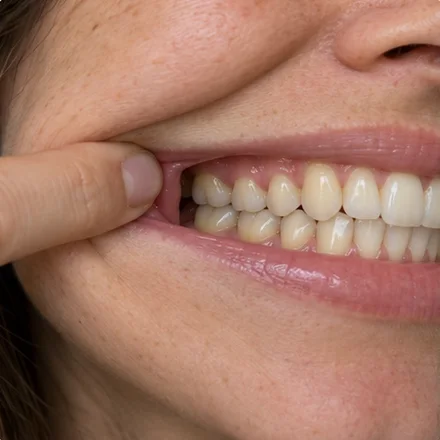 3Right side
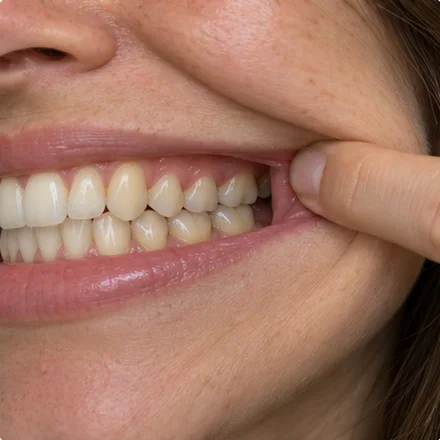 4Left side
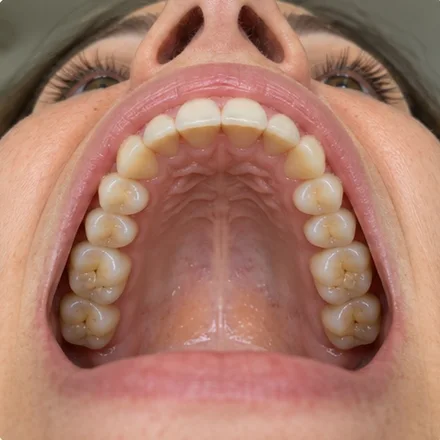 5Upper jaw
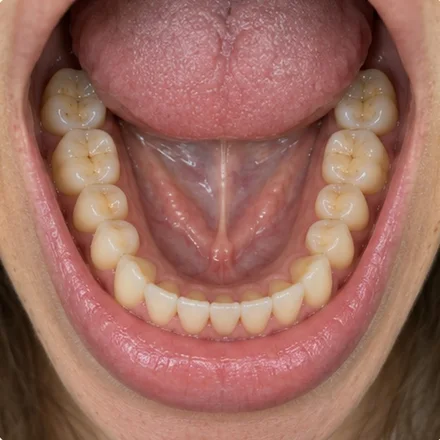 6Lower jaw
Turkey teeth gone wrong: frequently asked questions
1. Are Turkey teeth safe?
The treatments — crowns, veneers, implants — are the same ones British dentists provide every day; what decides safety is the clinic, not the country. The UK government's travel advice points patients to the Turkish Ministry of Health's list of approved providers on the HealthTürkiye website and advises you to research the clinic and tell your UK dentist your plans. TUA Dental's clinic holds the Ministry's international health-tourism licence, is a member of the Turkish Dental Association and is ISO 9001 certified, with five named dentists, a 3D CT scanner and its own laboratory. The ten checks on this page tell you how to judge any clinic, including ours.
2. What are the risks of Turkey teeth?
The real risks are planning risks: healthy teeth cut down for crowns they never needed, one shade and shape fitted to everyone, teeth prepared without an approved design, final teeth loaded onto implants that have not healed, unnamed materials, surprise costs in the chair and no one to call afterwards. Each has a prevention — tooth-by-tooth planning, a design approved before cutting, two visits for implants, named brands, an itemised plan, a named aftercare contact — and each prevention can be checked before you book. The clinical risks of the treatments themselves (sensitivity after preparation, an implant that does not fuse) are the same anywhere and are handled by the same means: good planning, healing time and follow-up.
3. Why do people regret Turkey teeth?
Most regret has one of three roots: a result that does not look like them (too white, too large, the same smile as everyone else), teeth that were cut more than they needed to be, or a problem after returning home with nobody to answer. All three come from the trip being sold as a package rather than planned as treatment. A smile designed to your face and tried in before anything is fixed, a plan that names the treatment for each tooth, and a coordinator and dentist who still answer after you fly are what turn the same treatments into a result people are glad of ten years later.
4. Will the NHS fix Turkey teeth?
The NHS treats clinical need — pain, infection, a broken tooth, a lost filling — under its normal bands, whatever country the original work was done in. It does not redo cosmetic work: nhs.uk says veneers are "generally only available privately, unless you can show a clinical need" and implants are "usually only available privately", so a crown you dislike or a chipped veneer is private treatment in the UK, at UK prices. That is why the aftercare that matters is the clinic's own. Ours continues after you fly home — photo first, your dentist answers, written guarantee of a lifetime on implants and five years on crowns.
5. Do UK dentists touch Turkey teeth?
Yes. A dentist in the UK can examine, clean and look after teeth treated abroad, and the General Dental Council's advice is simply to tell your dentist your plans beforehand so they are "aware of your plans in case of any later complications." What they need is information: which implant, where, what crown material, what was done and when. Every TUA Dental patient goes home with an implant passport, a 3D scan, a treatment report and a written guarantee, so any dentist can take over routine check-ups and cleaning without guessing — and if a question needs the dentist who did the work, ours is a photo away.
6. Is it safe to get dental implants in Turkey?
With the same brands, the same 3D planning and the same healing time as at home, yes. At TUA Dental every implant is planned on a 3D CT scan, placed by a named dentist — Principal Dentist Tuğçe Arslan has placed more than 2,200 — and comes from one of eleven named manufacturers, Straumann and Nobel Biocare among them, with its own implant passport. The treatment takes two visits, with two to three months of healing in between before the crowns are fitted, and the implant carries a lifetime guarantee. What to avoid anywhere is final teeth fitted onto implants in the same week they were placed. How Turkey compares with other countries for implants is set out in dental implants abroad.
7. How do I spot a bad clinic?
Six signs, visible in a first message or a first page: implants and final teeth promised in a few days; one price for everyone before anyone has seen an X-ray; no dentist's name anywhere; pressure to pay a deposit today; no written, itemised plan; and the same smile in every before-and-after photo. The positive version is the ten-point checklist on this page — a named dentist, an itemised plan, a mock-up, named materials, an implant passport, a 3D CT scanner, a realistic timetable, a written guarantee, a named aftercare contact and real reviews — and you can run every check before you pay anything.
8. What if a crown chips after I get home?
You message your coordinator, send a photo, and your dentist tells you what it is and what to do. A small chip on zirconia or E.max can often be smoothed by a dentist near you; your records and the material name make that a ten-minute job. If the crown needs replacing and it falls under your guarantee — five years on crowns — we put it right, including a return visit when that is what it takes. The step you never have to take is finding a stranger to start from scratch: your treatment report says exactly what was made, from what, and by whom.
9. Are Turkey teeth reversible?
Veneers and crowns are not reversible: once enamel has been removed, the tooth needs a restoration for life, which is why the treatment for each tooth is decided tooth by tooth and why healthy teeth are kept whenever a veneer or whitening will do. Implants replace missing teeth and take nothing from the neighbours. Our guide to veneers versus crowns explains how much tooth each one removes and when each is the right choice.
10. How long do Turkey teeth last?
With good care, many years: implants are designed for decades and carry a lifetime guarantee at TUA Dental, and zirconia and E.max crowns and veneers are guaranteed for five years and commonly last well beyond that with normal brushing, flossing and check-ups. What shortens the life of any restoration is the same everywhere — grinding, neglect, and work that was rushed or over-cut to begin with. Our guide to how long Turkey teeth last goes through each treatment in turn.